Why your body can stop responding the way it used to — and what actually helps
One of the most frustrating things about your 40s is realizing that the things that always worked suddenly don’t work quite the same way.
You can eat roughly the same way, move roughly the same amount and still notice more fat collecting around your middle. It can become harder to maintain muscle. Energy gets less predictable, cravings can change, sleep becomes more fragile, and losing five pounds can require considerably more effort than it did ten years ago.
There is biology behind that.
During perimenopause, estrogen becomes increasingly unpredictable and eventually declines. Research links this transition with changes in body composition, including more abdominal and visceral fat, changes in glucose metabolism and, for many women, a gradual loss of lean mass. Importantly, some of those changes can happen even when the number on the scale barely moves.
That doesn’t mean every woman suddenly becomes insulin resistant at 40, and it definitely doesn’t mean estrogen is responsible for every pound gained in midlife. Sleep, stress, activity, muscle mass, food, genetics and aging are all part of the picture.
But the metabolic landscape changes enough that doing more of exactly what worked at 30 may stop being the answer.
The good news is that some of the most useful things you can do are surprisingly simple.
First: insulin matters, but it isn’t the whole story
Insulin helps move glucose out of your bloodstream so it can be used for energy or stored for later. When your body is insulin sensitive, that system works efficiently. When insulin sensitivity decreases, the body generally needs more insulin to manage the same amount of glucose.
Perimenopause can make that system less forgiving. At the same time, many women are gradually losing muscle, sleeping less deeply and becoming more sedentary without necessarily realizing it. Since muscle is one of the major places the body uses glucose, losing it matters metabolically as well as physically.
This is why I don’t think midlife fat loss is simply a matter of eating less.
If you want the body to respond differently, you have to look at the bigger metabolic picture.
1. Make protein the anchor of the meal
I care much more about women getting enough protein in midlife than I do about obsessing over tiny differences in calories.
You are trying to protect something incredibly valuable: muscle. Protein gives the body the raw material to maintain and build it, makes meals more satisfying and also changes the way a carbohydrate-heavy meal lands compared with eating those carbohydrates on their own.
That doesn’t mean every meal has to become chicken breast and broccoli. It means looking at your plate and making sure there is an actual protein source there before assuming the handful of almonds in your salad somehow covered it.
2. Stop confusing under-eating with being disciplined
There is a difference between intentional fasting that genuinely suits you and accidentally running on coffee until mid-afternoon, becoming ravenous at five and then wondering why dinner turns into half the kitchen.
You do not need to force breakfast if you aren’t hungry. But you do need enough nutrition across the day to support muscle, movement and recovery.
Midlife is not the stage where I would repeatedly ask the body to do more with less and then be surprised when it starts pushing back.
3. Walk after you eat
This may be one of the least glamorous metabolic tools and one of the easiest to actually use.
When your muscles contract, they use glucose. That means movement immediately after a meal gives some of the glucose you just ate somewhere useful to go.
Research has repeatedly found lower post-meal glucose when people move after eating. Even a 10-minute walk immediately afterward has produced measurable improvements in post-meal glucose compared with sitting.
You don’t need workout clothes. You don’t need a 45-minute class. Eat dinner and go walk around the block.
It counts.
4. Build muscle — especially now
If there is one thing I wish more women took seriously before and during menopause, it is muscle.
Muscle affects far more than whether you look toned. It supports strength, mobility, glucose handling and body composition, and it becomes increasingly valuable as we age.
Large reviews in postmenopausal women have found resistance and other exercise training can improve muscle mass and body composition, with resistance training particularly useful for preserving and building lean tissue.
This is also why endless cardio paired with aggressive dieting can be such a bad bargain. If the scale drops while you are also losing metabolically useful lean tissue, that is not necessarily the transformation you think it is.
The goal isn’t simply to become lighter. It is to lose excess fat while protecting the tissue that helps you stay strong and metabolically healthy.
5. You can eat carbohydrates. Change the context.
I am not interested in making women afraid of carbohydrates.
But the way you eat them can change the glucose response.
Researchers have taken the exact same meal and simply changed the order in which people ate it. In one study involving people with prediabetes, eating vegetables and protein before the carbohydrate portion produced a glucose peak more than 40% lower than eating the carbohydrates first.
That’s useful because it doesn’t require counting anything.
Eat the vegetables and protein. Then eat the potato, bread or pasta.
Same dinner. Different response.
6. Give your last meal some room before sleep
Your body does not process food identically at every hour of the day, and eating a huge meal immediately before climbing into bed can also interfere with something that matters enormously for metabolism: sleep.
I wouldn’t turn this into another rigid wellness rule. Life happens. Late dinners happen. Dinner in Greece, Italy and Spain definitely happens.
But on ordinary nights, leaving a little space between a large evening meal and sleep is a very easy thing to experiment with, especially if you already notice poor sleep, reflux or difficult morning glucose.
Muscle may matter more than the number on your scale
The obsession with weight has made women underestimate body composition for years.
You can stay close to the same body weight while gradually carrying less muscle and more abdominal fat. Research across the menopause transition has documented this shift in fat distribution and body composition, which is one reason the scale can completely miss what you are actually experiencing.
This is why I care about strength, waist circumference, how clothes fit, how the body looks and feels, and actual body composition—not just a number in the bathroom.
Fat loss matters. So does keeping the muscle underneath it.
Where red light therapy fits into midlife fat loss
This is where technology gets interesting.
Red light therapy doesn’t replace the foundations above, but there is legitimate human research around photobiomodulation, body contouring and fat loss.
A randomized, double-blind, placebo-controlled trial using 635 nm light treated participants three times per week for two weeks. The treatment group lost an average of 3.51 combined inches across the waist, hips and thighs, compared with a much smaller change in the sham group. The waist alone decreased by an average of 0.98 inches during the treatment period.
And this is no longer one isolated study. A 2025 meta-analysis brought together 11 randomized controlled trials involving 569 participants with obesity and found significant pooled improvements in waist circumference, body weight and BMI with photobiomodulation.
That is one of the reasons targeted red light has remained central to NuShape from the beginning.
Can red light therapy help with belly fat?
If by belly fat you mean reducing the size of the waist and targeting stubborn fat around the abdomen, there is real human research here.
The clinical trials above specifically measured areas including the waist, and the 2025 pooled research found significant improvements in waist circumference along with other weight-related measures. That does not mean every red-light device or every protocol will produce identical results, but there is a huge difference between saying red light is a miracle and saying there is no evidence for fat loss or body contouring. The second statement simply isn’t true.
For women specifically frustrated by their midsection, this is one of the reasons targeted red light interests me so much: the waist is actually one of the areas researchers have studied.
EXPLORE THE NUSHAPE LIPOWRAP →
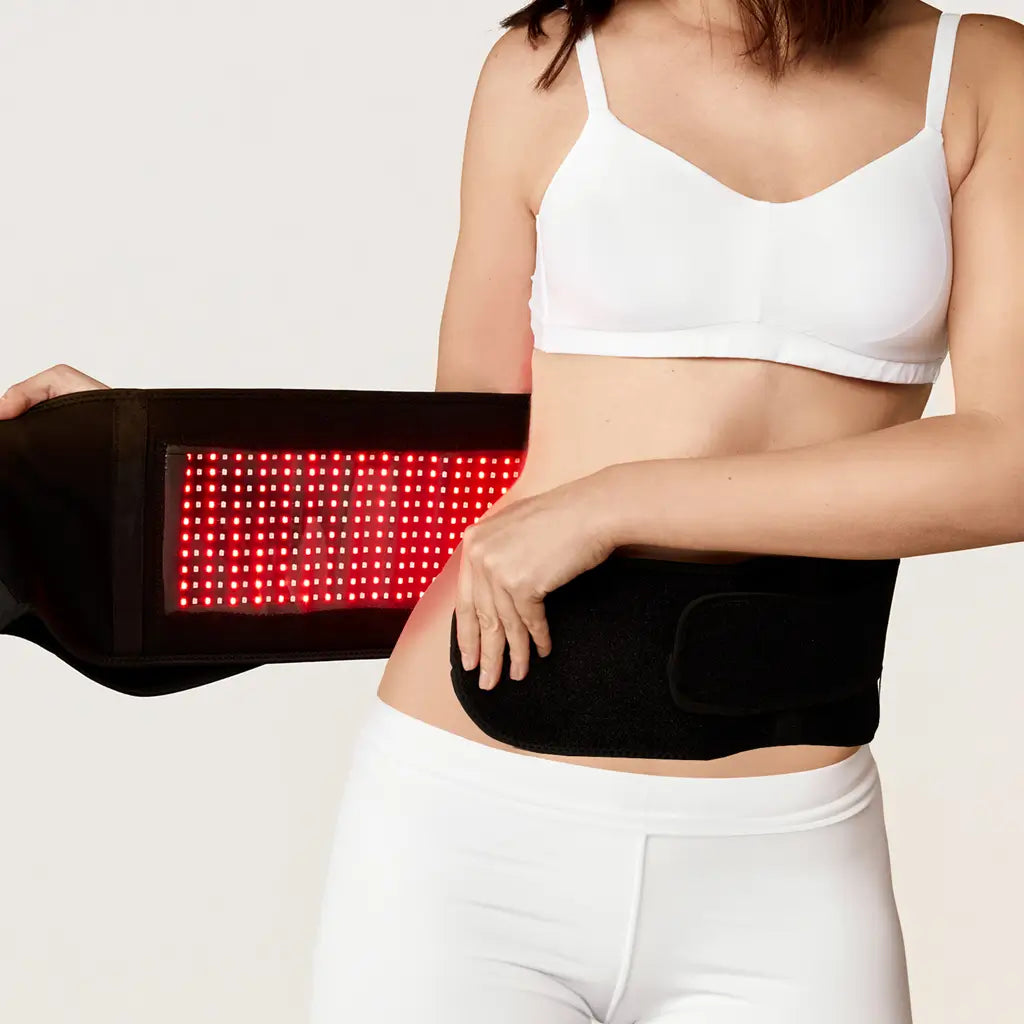
For someone who wants targeted treatment around the abdomen, waist, hips or thighs, the LipoWrap is the most focused option. NuShape’s current model uses 635 nm red light alongside near-infrared light in a wearable format.
EXPLORE THE LIPOMAT →
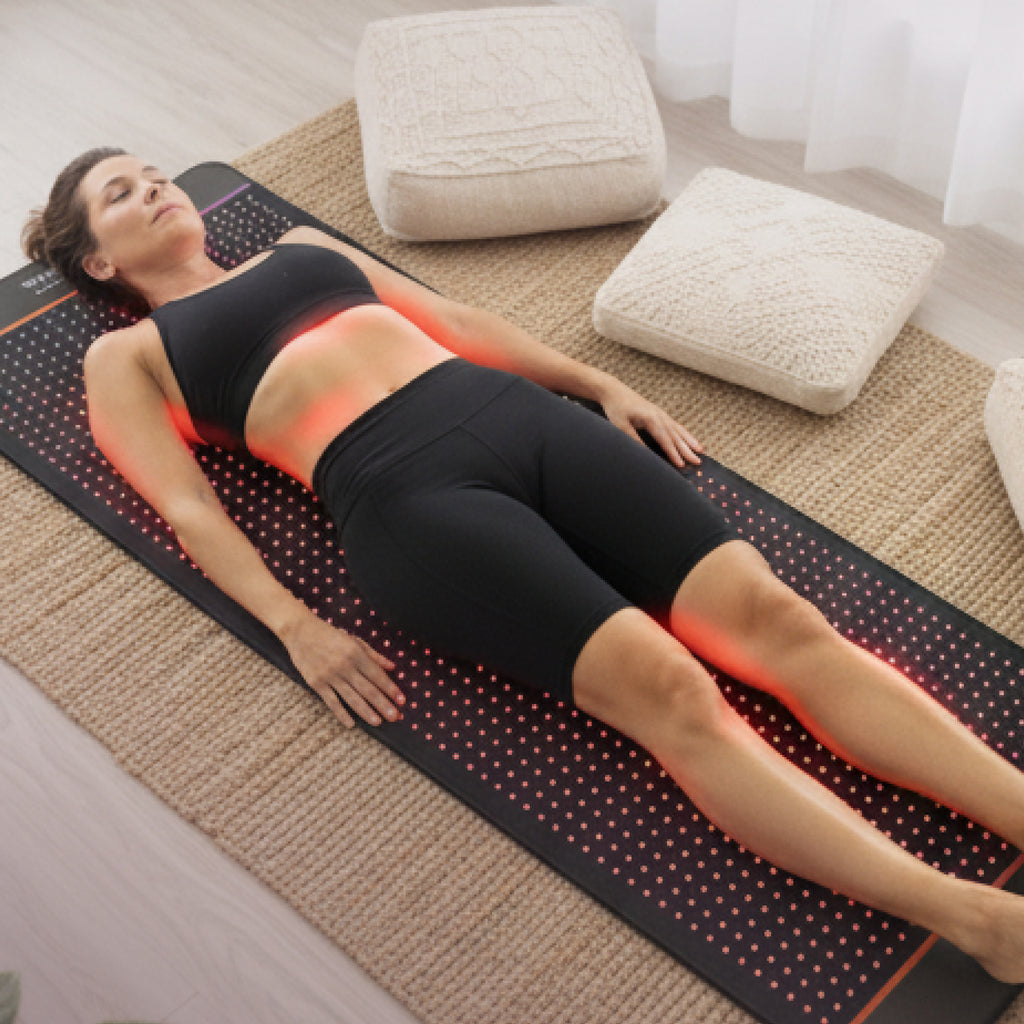
If you want broader coverage rather than treating one area at a time, the LipoMat is designed for full-body red and near-infrared light.
Recovery belongs in the metabolic conversation too
One of the mistakes women are often encouraged to make in midlife is simply adding more: more workouts, more cardio, more restriction, more supplements.
Nobody asks whether the body is recovering well enough from what it is already doing.
Poor sleep, chronic stress and inadequate recovery can change appetite, training performance and how consistently you can maintain any fat-loss routine in the first place.
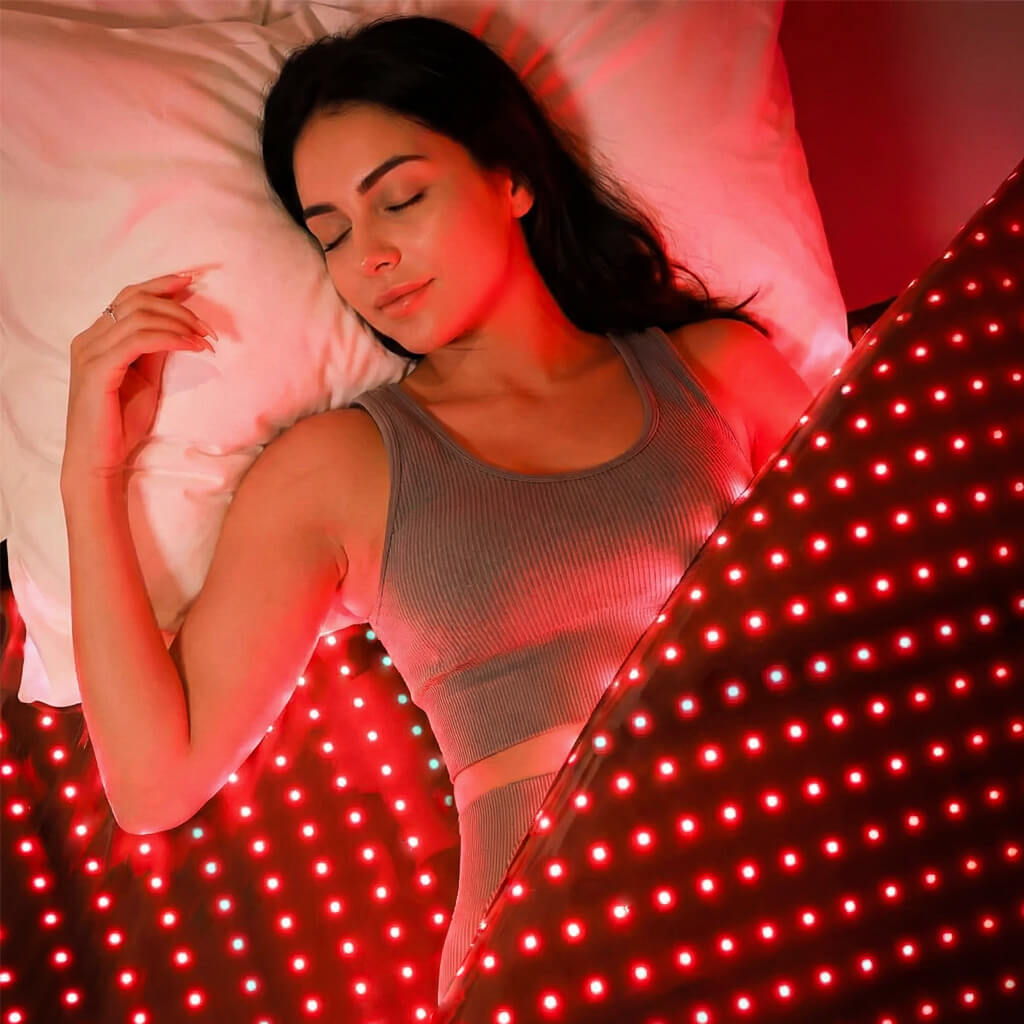
That is where I think wellness technology has another role. I don’t use recovery technology because I expect a mat to compensate for everything else. I use it because if recovery is easier, it becomes easier to keep doing the things that actually change the body.
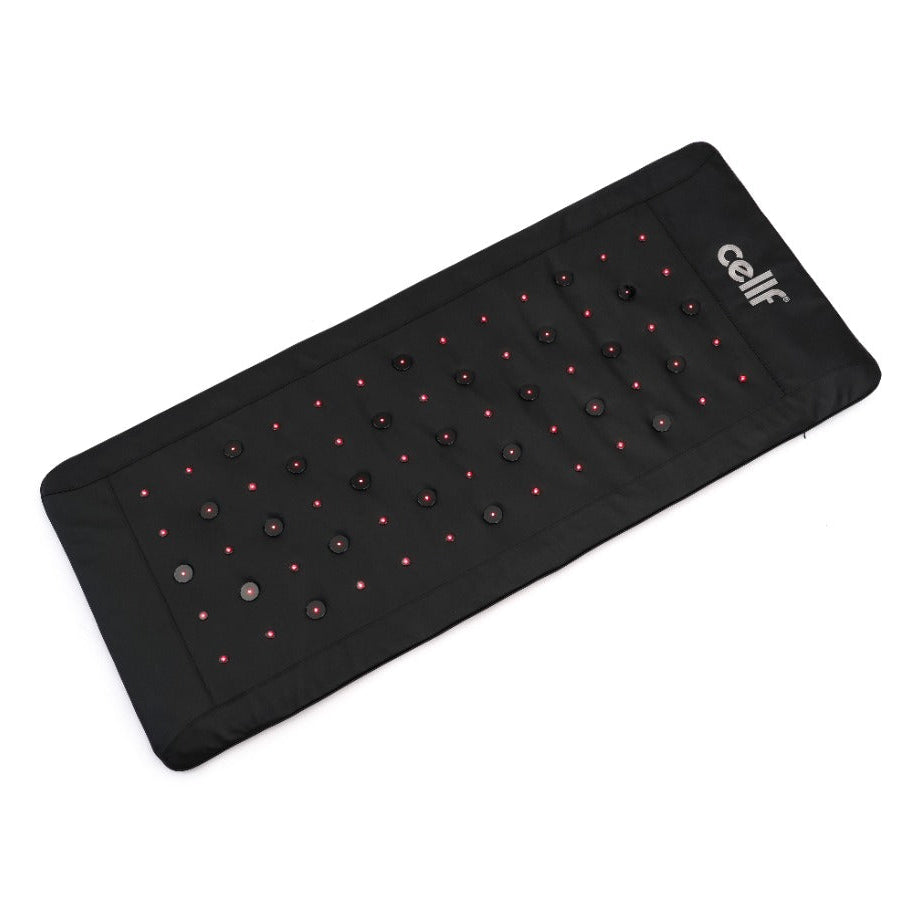
The CELLF Multi-Therapy Mat combines PEMF, infrared heat and red + near-infrared light in one full-body system, which makes it a very different tool from the slimming-focused LipoWrap or LipoMat.
EXPLORE THE CELLF MULTI-THERAPY MAT →
What this can look like in real life
None of this needs to turn eating into a full-time job.
A normal day might start with a protein-forward first meal instead of something that is almost entirely carbohydrate. Lunch and dinner can be built around a real serving of protein, vegetables, something with fiber and whatever carbohydrates you actually enjoy. When it makes sense, eat the protein and vegetables first.
Walk after one or two meals. Strength train regularly enough to actually challenge your muscles. Use the red light while answering emails or watching something if that is what makes consistency realistic.
Then protect your sleep instead of searching for another supplement to compensate for not getting it.
There is room inside this for travel, restaurants, pasta, bread, a glass of wine and an actual life.
The point is not to become perfect.
It is to understand what changed well enough that you stop fighting your body with the same strategies that stopped working.
Midlife metabolism FAQ
Why does belly fat increase during perimenopause?
Part of it is aging and lifestyle, but the hormonal transition itself is also associated with changes in where women store fat. Research consistently shows a shift toward greater abdominal and visceral fat through perimenopause and menopause, sometimes without a dramatic increase in overall body weight.
Does menopause cause insulin resistance?
It can contribute to changes in insulin sensitivity and glucose metabolism, but it is too simplistic to say every woman becomes insulin resistant when estrogen falls. Muscle mass, activity, body composition, genetics, sleep and diet all matter too. More recent reviews describe perimenopause as a period of increased metabolic vulnerability rather than one single hormonal switch suddenly breaking.
Does walking after meals really help blood sugar?
Yes. It is one of the simplest strategies with actual human evidence behind it. Even brief post-meal walking can reduce the glucose rise after eating.
Can red light therapy help with belly fat?
Yes, there is human research specifically involving reductions around the waist. Clinical trials using 635 nm low-level light have reported measurable circumference reductions, and pooled randomized-trial data published in 2025 found significant improvements in waist circumference, body weight and BMI. Red light makes the most sense as part of a larger fat-loss strategy rather than pretending that food, movement, muscle and sleep suddenly stop mattering.
Start with what moves the needle
Midlife does not require punishing your body into submission. It does require paying attention to slightly different things.
Protect the muscle. Eat enough protein. Walk after meals. Strength train. Sleep. Pay attention to glucose and meal sequencing if it is relevant to you. Then use technology where it genuinely gives you something extra.
That is a much smarter approach to fat loss than simply doing more of what stopped working.
TARGETED RED LIGHT — EXPLORE THE LIPOWRAP →
FULL-BODY RED LIGHT — EXPLORE THE LIPOMAT →
FULL-BODY RECOVERY — EXPLORE CELLF →