What the science actually says about fat loss, metabolism, recovery and cellular health
Red light therapy and hydrogen water are two tools I use regularly, but they work in very different ways.
Red and near-infrared light interact with cells through photobiomodulation, influencing cellular signaling and mitochondrial activity. Molecular hydrogen is being studied from another direction, particularly for its relationship with oxidative stress, inflammation, glucose and lipid metabolism, appetite signaling and metabolic health.
Both have also attracted an enormous amount of marketing.
You will find people claiming red light melts fat while you sleep and hydrogen water somehow detoxes everything in sight. I don’t think we need to make those claims because the research is already interesting enough.
If fat loss is your goal, there is real red-light research involving fat cells and measurable changes in body circumference. Hydrogen research is beginning to touch several of the systems that influence weight regulation, including insulin, glucose metabolism, cravings, appetite signaling and oxidative stress.
Neither means food, movement, muscle and sleep suddenly stop mattering.
But I also don’t think these technologies should be watered down into vague “wellness support” when there is considerably more interesting evidence behind them than that.
What red light actually does to fat cells
This is one of the studies that made me interested in red light for body composition in the first place.
Researchers exposed human adipose tissue from 12 healthy women to 635 nm low-level laser light. After four minutes of exposure, approximately 80% of the lipid content had been released from the adipocytes; after six minutes, the researchers reported 99% release. Electron microscopy showed temporary pores in the adipocyte membranes, allowing lipid material to move into the surrounding space while nearby tissue remained intact.
That finding needs to be understood correctly. It was a tissue study associated with low-level laser-assisted lipoplasty, not a clinical trial showing that someone can wear a red-light device for six minutes and lose 99% of their body fat.
But it demonstrated something extremely interesting: specific red-light exposure could directly change what was happening inside human fat cells.
That gave researchers a mechanism worth investigating in actual body-contouring trials.
What happened when red light was tested on actual bodies?
In a double-blind, randomized, placebo-controlled study of 67 adults, participants received either 635 nm low-level light or sham treatment three times per week for two weeks.
The treatment group lost an average of 3.51 combined inches across the waist, hips and thighs, compared with 0.684 inches in the sham group. The average reduction at the waist alone was 0.98 inches during the treatment period.
Other body-contouring trials followed, and the research base has continued to grow.
In 2025, researchers pooled 11 randomized controlled trials involving 569 participants with obesity. Their meta-analysis found significant improvements in waist circumference, body weight and BMI with photobiomodulation. The authors still called for larger and longer trials, which is fair, but this is no longer a conversation based on one obscure study from twenty years ago.
So when someone says there is absolutely no research connecting red light with fat loss or body contouring, that is simply not an accurate description of the evidence.
Can red light therapy help with belly fat?
If by belly fat you mean reducing the size of the waist and targeting stubborn fat around the abdomen, there is real human research here.
The 635 nm randomized trial above found nearly an inch of average waist reduction during six treatments over two weeks, alongside changes at the hips and thighs. And the 2025 meta-analysis found significant pooled improvements in waist circumference as well as body weight and BMI.
That does not mean every device, wavelength or protocol will produce identical results. But there is a big difference between claiming red light is magic and pretending there is no evidence for fat loss or body contouring.
For women specifically frustrated by the midsection, this is one of the reasons targeted red light interests me so much: the waist is actually one of the areas that has been studied.
Targeted red light: LipoWrap
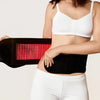
The LipoWrap makes the most sense if you want something wearable that can be positioned directly around the abdomen, waist, hips, thighs or another specific area. The current device uses 635 nm red light alongside near-infrared light and was designed to turn what had traditionally been an in-office treatment into something portable enough to use in real life.
EXPLORE THE LIPOWRAP →
Full-body red light: LipoMat
If you want to treat much more of the body at once, the LipoMat is the better fit. It uses 635 nm red and 850 nm near-infrared light across a full-body mat rather than concentrating treatment into one wearable area.
EXPLORE THE LIPOMAT →
Does red light therapy release fat from fat cells?
Yes, this is one of the more interesting areas of red-light research.
The 2002 human adipose-tissue study found that 635 nm exposure caused stored lipid material to leave the adipocytes through temporary openings in the cell membrane. After four minutes the researchers reported approximately 80% lipid release in the treated samples, increasing to 99% after six minutes.
Clinical body-contouring research later reported measurable circumference changes in actual participants.
So the idea that red light can influence adipocytes and support localized body contouring is not simply a line invented by the wellness industry.
What happens over the longer term still depends on the rest of the body. Released energy still exists, which is why movement, muscle, food and overall metabolism remain part of the conversation.
That is exactly why I prefer thinking about red light as part of a fat-loss protocol rather than pretending the device somehow makes biology disappear.
Hydrogen water is much more interesting than it sounds
Hydrogen-rich water is exactly what the name suggests: water containing dissolved molecular hydrogen, or H₂.
Molecular hydrogen is extremely small and can diffuse through biological membranes. Researchers have become increasingly interested in how it interacts with oxidative stress, inflammation, mitochondrial function and glucose and lipid metabolism. A 2025 review describes those as several of the key areas being investigated.
The human research is younger than the research on things like exercise and nutrition, but there are already findings worth paying attention to.
A randomized, double-blind, placebo-controlled 24-week trial followed 60 men and women with metabolic syndrome. High-concentration hydrogen-rich water significantly reduced blood cholesterol and glucose, lowered HbA1c and improved markers related to inflammation and redox balance compared with placebo. Researchers also reported mild improvements in BMI and waist-to-hip ratio.
A newer randomized trial published in 2025 studied people with obesity drinking one liter of hydrogen-rich water daily for eight weeks. Compared with control water, the hydrogen group experienced reduced cravings, better subjective sleep quality, lower total and LDL cholesterol and higher levels of GLP-1, a hormone involved in appetite and satiety.
And in a small double-blind crossover pilot involving middle-aged overweight women, molecular hydrogen significantly reduced body-fat percentage and arm-fat index compared with placebo, alongside reductions in triglycerides and fasting insulin. Scale weight itself did not significantly change, which is another good reminder that body composition can tell us things the scale does not.
That is a much more interesting conversation than calling it fancy water.
Can hydrogen water support weight loss?
There is enough human evidence now that I think hydrogen deserves a serious place in the weight-loss conversation—not because it somehow dissolves fat in your glass, but because researchers are finding effects on several systems that influence whether losing fat feels relatively easy or incredibly difficult.
The studies above have reported changes in body-fat percentage, fasting insulin, glucose metabolism, cravings, GLP-1, cholesterol and waist-to-hip ratio. Those are not all the same outcome, and hydrogen research is still developing, but together they give us a much more interesting metabolic picture than “water with bubbles.”
Fat loss is not controlled by one switch. Appetite, insulin, glucose regulation, inflammation, sleep, activity, muscle and food intake all influence the environment in which it happens.
I’m not using hydrogen water instead of walking, lifting or eating well. I’m using it alongside those things because fat loss is more complicated than “eat less and move more.”
Add hydrogen without adding another complicated routine
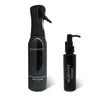
The Alchemy H2 Hydrogen Water Bottle produces freshly generated hydrogen-rich water in a portable format, with the current model generating up to 10,000 PPB depending on the cycle. It takes approximately five to ten minutes, which is exactly why I like it: it can simply replace some of the water you were already going to drink.
EXPLORE ALCHEMY H2 →
Why I pair red light and hydrogen water
I pair them because fat loss is not one mechanism, and these two technologies approach the bigger picture from very different directions.
Red light has research around photobiomodulation, mitochondrial signaling, adipose tissue and measurable body-contouring outcomes. Molecular hydrogen is being studied more systemically around oxidative stress, glucose and lipid metabolism, insulin, inflammation and appetite signaling. Human hydrogen studies have now reported changes in cravings, GLP-1 and metabolic markers, while the red-light literature includes randomized trials showing changes in waist and other body measurements.
I’m not pairing them because someone proved that drinking hydrogen water five minutes before using red light creates a magical fat-burning reaction. We don’t have that study.
I pair them because one gives me a way to work directly with the areas I’m targeting, while the other supports some of the metabolic systems that influence what is happening throughout the body.
They also happen to be incredibly easy to use together. Drink freshly made hydrogen water, use the light, then keep doing the things that actually move fat loss forward—walking, strength training, eating well and sleeping properly.
That is where the combination makes the most sense to me: target the area while supporting the bigger metabolic picture.
A simple red light + hydrogen water routine
There is no reason to turn this into a six-step morning ceremony.
Hydrogen is volatile, so freshly prepared hydrogen water makes the most sense rather than generating it and leaving it sitting open on your desk all day. With the Alchemy H2, that can simply become part of morning hydration or something you use again around exercise and recovery.
Red light can then fit wherever you are most likely to use it consistently. If body composition is the goal, I like combining the light with the part of the day when I am already doing something metabolically useful rather than treating it as a completely separate weight-loss ritual.
That might mean a targeted LipoWrap session followed by a walk, or using the full-body LipoMat around a training or recovery session.
You do not have to find the mythical perfect minute when hydrogen and red light somehow collide.
Consistency matters much more.
Where “detox” fits
I use the word detox more carefully than I used to because the wellness industry has stretched it to mean almost anything.
Your liver, kidneys, gastrointestinal tract, lungs and other systems are already processing and eliminating metabolic waste and compounds the body does not need.
No bottle of water or red-light mat suddenly switches those organs on.
What we can talk about more intelligently is supporting the environment those systems are working in. Oxidative stress, inflammation, hydration, movement, circulation and metabolic health are all part of that bigger picture.
Molecular hydrogen research is particularly interesting here because much of it centers on redox balance and oxidative stress rather than the cartoon version of “toxins leaving your body.”
That is the kind of detox conversation I’m interested in.
Red light therapy + hydrogen water FAQ
Can red light therapy help with weight loss?
Red light can support a weight-loss and body-composition program, although some of the most interesting research has measured changes in inches and circumference rather than only watching the scale.
Clinical studies have reported reductions in the waist, hips, thighs and arms, and the 2025 meta-analysis of 11 randomized trials found significant pooled improvements in waist circumference, body weight and BMI.
For many women, a smaller waist, less volume through a stubborn area and clothes fitting differently matter just as much as the number on the scale.
That is why I think of red light as a fat-loss and body-composition tool, not simply a scale-weight tool.
Does red light therapy release fat from fat cells?
There is direct laboratory evidence that certain red-light wavelengths can alter adipocytes and cause stored lipid material to move out of the cell.
The well-known 635 nm human adipose-tissue study found approximately 80% lipid release after four minutes of treatment and 99% after six minutes in the treated tissue samples, alongside temporary openings in the adipocyte membrane.
That laboratory result should not be confused with losing 99% of someone’s body fat. But combined with subsequent human body-contouring trials, it gives us a plausible and very interesting biological mechanism behind the circumference changes researchers have measured.
What are the benefits of hydrogen water?
Hydrogen-rich water is being studied for considerably more than hydration. Human and clinical research has explored its relationship with oxidative stress, inflammatory signaling, glucose regulation, insulin, cholesterol, exercise recovery and broader metabolic health.
Recent randomized research has also reported reduced cravings and increased GLP-1, a hormone involved in appetite and satiety, alongside improvements in subjective sleep quality and cholesterol.
That is why hydrogen is becoming increasingly interesting in the metabolic-health conversation.
Can hydrogen water help with weight loss?
Potentially, and the reason is broader than calories alone.
In a small placebo-controlled trial of middle-aged overweight women, molecular hydrogen significantly reduced body-fat percentage compared with placebo and improved fasting insulin and triglycerides. A longer randomized trial in people with metabolic syndrome found improvements in glucose and other metabolic markers along with mild improvements in BMI and waist-to-hip ratio. More recently, hydrogen-rich water has also been shown to reduce cravings and increase GLP-1 in a randomized study involving people with obesity.
That does not make hydrogen water a magic diet drink.
It does make it an interesting metabolic tool, especially when it is being used alongside nutrition, movement, muscle and the rest of a serious fat-loss routine.
Should hydrogen water be taken before red light therapy?
There is no established research showing that hydrogen water has to be consumed at a precise time before or after red light in order for either technology to work.
I care much more about using both consistently. Drink hydrogen water while it is freshly prepared and use red light on a schedule that actually fits your life.
Can red light therapy and hydrogen water be used every day?
Hydrogen water is designed to fit easily into normal hydration. Red-light frequency depends on the device, wavelength, dose and intended use, so follow the protocol for the NuShape device you actually own rather than assuming more exposure automatically means better results.
The bigger picture
If fat loss is the goal, I still care about muscle, movement, protein, sleep and the metabolic environment around all of it.
What interests me about red light and hydrogen is that they give us two very different ways to support that process without turning wellness into another full-time job.
Red light gives us a way to target tissue directly. Hydrogen is emerging as a much broader metabolic and cellular tool.
Use the technology. Understand why you are using it. Keep the fundamentals.
That is a much better strategy than waiting for any one thing to become the miracle.
TARGETED RED LIGHT — EXPLORE THE LIPOWRAP →
FULL-BODY RED LIGHT — EXPLORE THE LIPOMAT →
HYDROGEN WATER — EXPLORE ALCHEMY H2 →