In short: Every meal sends your cells instructions. Protein says build and repair. Movement and the gap between meals say clean up. Carbohydrates say store. Plants switch on your cells' own defences, fiber feeds the gut bacteria who talk back, and the time you eat sets your body clock. Blood sugar is the signal you feel most directly, and nearly everything here works by keeping it steady. Simplest place to start: about 30 grams of protein at each meal, breakfast included. In a 2014 trial, spreading protein evenly through the day produced about 25% more muscle repair over 24 hours than eating most of it at dinner.
Most of us were taught to think about food as an amount. Calories, macros, portions. That covers a small part of what food does.
Food is also a message. Each time you eat, your cells read what arrived and decide what to do next: build or store, repair or burn. The same 500 calories can give your body two completely different instructions depending on what the food is made of, when it arrives, and what came before it. So the useful question stops being "how much should I eat" and becomes "what do I want my body to do this afternoon?"
The signals your food sends
Your cells read several messages at once with every meal. Two set the overall direction. The rest fine-tune energy, appetite, inflammation and sleep.
mTOR tells cells to build. Cells grow, make new protein and repair muscle. Protein turns it on, especially the amino acid leucine, which is why a protein-rich meal starts repair after a workout or a long night.
AMPK tells cells to clean up. It switches on when energy runs low: exercise, the stretch between dinner and breakfast, a lighter day. Cells clear damaged parts, burn fuel more efficiently and make new mitochondria. Polyphenols in olive oil, green tea, berries and dark chocolate give it a small push.
Insulin tells cells to store. Carbohydrates release it. Steady, moderate insulin is healthy. Sharp, repeated peaks from refined carbs eaten alone leave you tired, hungry again in two hours, and more likely to store what you ate.
Autophagy is the recycling program. When AMPK is on and mTOR is off, cells break down worn-out proteins and damaged mitochondria and reuse the parts. This is why the overnight gap matters.
Sirtuins and NAD+ sense your energy level. They work alongside AMPK and are linked to mitochondrial health and DNA repair. The human evidence is still young, so be cautious with anything that promises to "activate" them. Movement, the overnight gap and niacin-rich foods are the honest levers.
NRF2 switches on your defences. Sulforaphane in broccoli sprouts, curcumin in turmeric and the bitter compounds in good olive oil tell cells to make their own antioxidant and detox enzymes. A small training stress that leaves the cell stronger.
NF-κB is the inflammation dial. It turns up with refined sugar, industrial seed oils, trans fats and processed meats, and down with omega-3s, polyphenols and fiber. Left high for months, you feel it as puffiness, slow recovery and brain fog.
GLP-1, leptin and ghrelin control appetite. Protein, fiber and fat trigger the fullness hormones. Ghrelin, the hunger signal, climbs when meals are small, late or carb-only. A protein-forward breakfast quiets the whole system for hours, which is why it ends the 11am snack hunt.
Short-chain fatty acids are your gut's reply. Your bacteria ferment fiber into butyrate, acetate and propionate, which calm inflammation, help regulate appetite and blood sugar, and talk directly to your immune system and brain.
Clock genes read the time. Every organ runs on its own clock, and food helps set it. Eating early tells your liver and muscles it's daytime. Eating late tells them the opposite, and they handle the same meal less well.
None of these is good or bad on its own. A body stuck in build mode never cleans house; a body stuck in clean-up mode never rebuilds. What you want is a daily swing between states, and your meals set it.
Glucose: the signal you can feel
Blood sugar decides how you feel hour to hour. Here's the pattern most people live in without knowing it. A meal heavy in refined carbs, eaten quickly and alone, pushes glucose up fast. Insulin brings it down hard and often overshoots. Ninety minutes later you're tired, foggy and reaching for something sweet or a coffee. That next hit starts the cycle again. By 4pm you've ridden three or four of these waves, and the exhaustion feels like a personality trait. It's a glucose pattern.
Steady glucose feels like even energy through the afternoon, a clear head, hunger that arrives on schedule, and better sleep. Over years it also matters: repeated peaks drive glycation, where excess sugar stiffens proteins like collagen (visible in skin), and chronically high glucose is the upstream cause of insulin resistance.
Worth knowing:
-
The shape of the curve matters more than the number. A gentle rise and fall is normal. Sharp peaks and crashes are the problem, and they happen in people whose fasting glucose is perfectly fine.
-
Sugar in "healthy" food counts. Juice, smoothies, granola, flavoured yogurt, oat-milk lattes and most protein bars behave like dessert on a glucose monitor. Whole fruit behaves differently because the fiber is still attached.
-
Fructose goes to the liver. Table sugar and high-fructose corn syrup are half fructose, and in volume the liver turns it into fat. Liquid sugar is the first thing worth cutting.
-
Everything in this post flattens the curve. Protein first, fiber first, fat alongside carbs, carbs near movement, a short walk after eating, vinegar before a meal, earlier dinners.
A continuous glucose monitor worn for two weeks is the most eye-opening experiment in nutrition. You don't need one, though. The 3pm energy check in the experiment below is a good proxy.
Protein is the switch you control at every meal
If you take one practical thing from this post: eat enough protein, and spread it through the day.
Most people eat protein in a skew: a little at breakfast, more at lunch, a lot at dinner. Your body can only use so much build signal at once; the rest gets burned or stored. In a 2014 trial, healthy adults ate the same 90 grams of protein a day in two patterns: about 30 grams at each of three meals, or 10 at breakfast, 15 at lunch and 65 at dinner. The even pattern produced about 25% more muscle protein synthesis over 24 hours. Same food, same total, different message.
Thirty grams at breakfast is more than most of us eat. Three eggs is about 18 grams, a cup of Greek yogurt about 20, a palm-sized piece of salmon or chicken 25 to 30. Make breakfast look more like dinner and, within a week, the mid-morning snack hunt disappears and afternoon cravings quiet down. Plant proteins work too; lentils, tofu and tempeh carry less leucine per gram, so portions need to be a little bigger.
Fats and carbs: use them as tools
Fat is the slow, steady fuel that makes a meal satisfying enough to stop thinking about food. Olive oil, avocado, nuts, oily fish, eggs. It also slows digestion, which helps when it travels with carbs.
The fat worth being choosy about is the industrial kind. Soybean, corn, canola, sunflower, cottonseed and anything labelled "vegetable oil" are extracted with heat and solvents, are very high in omega-6, and break down when heated and reheated, which is how restaurants and food factories use them. Your body does need some omega-6; the problem is proportion. Most modern diets run 15 or 20 parts omega-6 to one part omega-3, and the body seems to do best much closer to balance. That ratio feeds the inflammation dial and crowds out the omega-3s that calm it. Cook with olive oil, avocado oil, butter, ghee or coconut oil, eat oily fish twice a week, and read the label on dressings, sauces, crackers and anything fried.
Carbohydrates are the fast fuel and the strongest insulin signal, so they're most useful when your body has somewhere to put them: around movement. Carbs near a workout, a long walk or a physical day refill muscle. Carbs during the stillest part of the day send a louder store signal. So the strategy is placement. Have the rice, the bread, the fruit, and have most of it near the hours you move. In still hours, keep carbs slower (oats, legumes, whole fruit) and pair them with protein or fat.
The quality rule: food that still looks like it did when it was alive carries clearer information than food from a factory. A sweet potato and a bag of chips are both carbohydrate. Only one arrives with the fiber, water and minerals that change how the sugar is handled.
Organic, bio, GMO: does the label matter?
What came along with the food is part of the message. Pesticide residues, herbicides, antibiotics and the feed an animal ate all travel with it, and your gut bacteria read those too.
Organic ("bio" in Europe) is the choice whenever you can make it. Organic produce is grown without synthetic pesticides and fertilisers, and organic animal products come from animals raised without routine antibiotics or growth hormones. The research backs the instinct: organic produce carries clearly lower pesticide residues and higher levels of certain polyphenols, the protective plant compounds that also happen to be what makes food taste like itself. The residue difference matters most on foods you eat often with the skin on. If the budget only stretches so far, start with the Environmental Working Group's yearly "Dirty Dozen" (strawberries, spinach, kale, grapes, peaches, apples), where conventional versions test highest for residues, and work outward from there.
GMO foods are worth avoiding, and the reason is more practical than the label suggests. Most GMO crops were engineered to survive heavy spraying with glyphosate, so a GMO corn, soy, canola or sugar-beet product usually arrives with more herbicide residue than its conventional cousin. Glyphosate blocks a pathway that plants and bacteria rely on, which is exactly the pathway your gut bacteria use, and researchers are actively studying what that does to the microbiome. If food is information, GMO food carries a message you didn't choose. The way around it is simple: eat fewer things that come from a packet, since that's where these four crops hide, and buy organic soy and corn when you do want them. Organic certification excludes GMO by definition.
For animal foods, the signal is how the animal lived. Grass-fed beef and lamb, pasture-raised eggs and poultry, and wild-caught fish carry more omega-3s. Farmed salmon and grain-fed meat sit toward the omega-6 end.
Local and seasonal quietly beats both labels for a lot of produce. A tomato picked ripe at a farm two hours away carries more flavour and polyphenols than an organic one shipped green across an ocean.
None of this should turn into supermarket anxiety. On a tight week, a conventional apple is still a far better signal than an organic cookie, and real food always beats the label. Get the structure right first (protein, plants, fats, timing), then move toward organic as far and as fast as your budget allows.
Your gut is listening too
The trillions of bacteria in your gut read your meals and talk back. What they want is variety. The American Gut Project, the largest study of its kind, found that people who ate more than 30 different plant foods a week had noticeably more diverse gut bacteria than people who ate 10 or fewer, vegetarian or not. Herbs, spices, nuts, seeds, coffee and olive oil all count, along with every vegetable, fruit, legume and whole grain. A well-stocked kitchen gets to 30 without trying.
Two more things your gut appreciates: fiber increased slowly (Mayo Clinic suggests about 3 grams more a week, with plenty of water, toward 30 to 40 grams a day), and fewer artificial sweeteners and emulsifiers.
When you eat is part of the message
Start the day with water, not coffee. You wake mildly dehydrated, and most of us reach straight for a diuretic. First, a large glass of water with the juice of half a lemon and a pinch of Celtic or Baja Gold sea salt. The salt brings the minerals that help cells hold onto water (sodium, magnesium, potassium and trace minerals, which refined white salt lacks). People who do this consistently report fewer mid-morning headaches, less false hunger, and a gentler landing when the coffee arrives.
Eat earlier. Insulin sensitivity is higher in the morning and digestion slows in the evening, so a big meal at 9pm asks a body that's winding down to do heavy work. In a tightly controlled 2018 trial, men ate all their food in a window ending by mid-afternoon for five weeks. Insulin sensitivity and blood pressure improved even though weight didn't change, because calories were matched. The timing alone carried the information.
You don't need a six-hour window. The version most people can live with: a real breakfast with protein, dinner on the earlier side, and a 12 to 13 hour overnight gap. That gap is when AMPK gets its turn and sleep does its best work.
On intermittent fasting. Longer gaps, like a 16-hour fast, are a stronger version of the same signal and suit some people well: those with signs of insulin resistance, those who find one simple rule easier than constant decisions, and anyone whose evenings have drifted into grazing.
They don't suit everyone, and women in particular need to read their own feedback. A body that's under-slept, over-stressed, training hard or short on protein can read a long fast as one more stressor. The reply is higher cortisol, disrupted sleep, a stalled cycle and hair shedding. If fasting leaves you wired at night, cold, irritable or thinking about food all day, that's your answer: a 12-hour gap and an earlier dinner give most of the benefit with none of the cost. Anyone with a history of restrictive eating should work through fasting with a professional.
What you eat and when you eat it are the same conversation. A clean, protein-forward day eaten in a late, compressed window sends a mixed message. The signal is clearest when content and timing agree.
Run the experiment on yourself
Bodies differ, and the only data that matters is yours. A two-week experiment:
-
Change one thing. Start with breakfast protein. Aim for 30 grams and change nothing else. (If that feels like a lot, start with the morning glass of lemon and salt water.)
-
Track three things, once a day. Energy at 3pm (1 to 5), hunger between meals (1 to 5), and how you slept.
-
Hold for a week, then look. If the numbers moved, keep the change and add the next: earlier dinner, or carbs moved toward your active hours.
-
Let the feedback decide. If something that's supposed to help makes you feel worse, believe your body over the blog, including this one.
Nutritional changes compound. Week six looks nothing like week one, which is why the people who get results are usually the patient ones.
If you'd rather not run the experiment alone, this post is a condensed version of the food module inside The Wellness Workshop, where it sits alongside light, water, movement, breath and sleep as one of the daily signals your biology reads. The six foundation modules are open to everyone. And if you want the guesswork taken out entirely, the Personal Protocol starts with a functional-medicine-style intake and comes back as a four-week plan Jessica reviews herself, built around your goals, your schedule and how your body actually responds.
The takeaway
Protein, spread through the day, tells your cells to repair. The gap between dinner and breakfast tells them to clean house. Variety tells your gut to thrive. Timing tells your metabolism whether it's working with your clock or against it. None of this needs counting, cutting or willpower. It needs clearer messages.
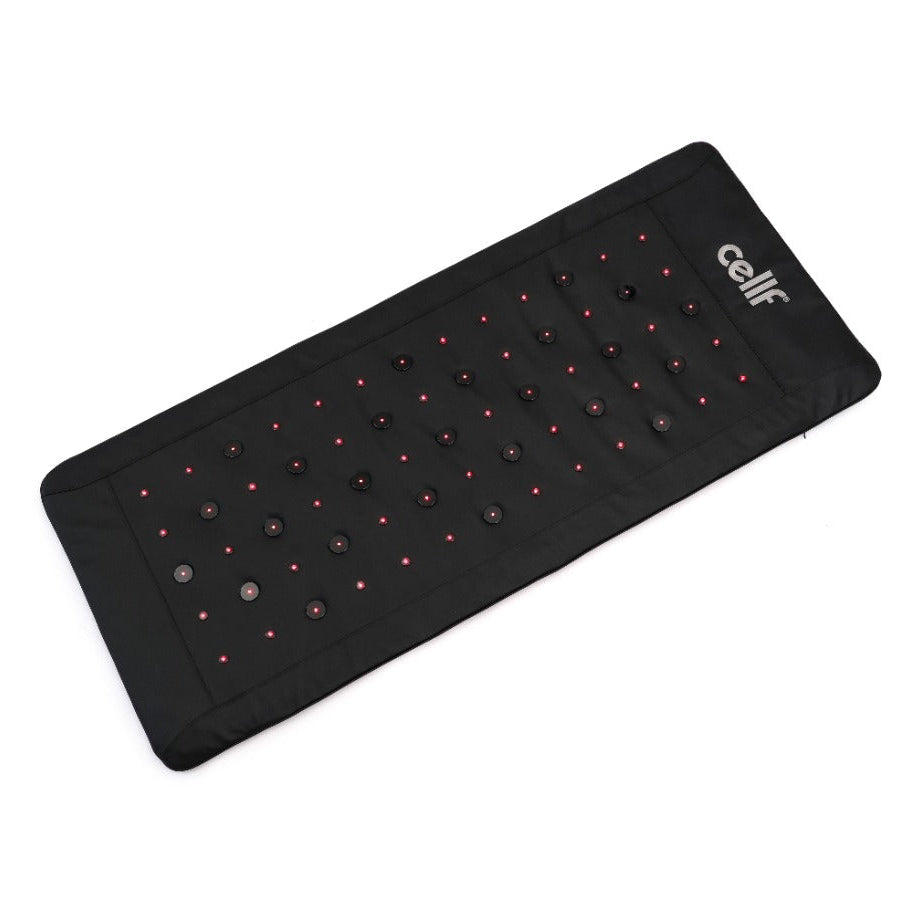
The evening is where it comes together: an earlier, protein-forward dinner, a short walk, then time on the Cellf Multi-Therapy Mat or wrapped in the LipoWrap while your body shifts into its repair window. Food sets the state; light and warmth help you stay in it. For the full-body version, that's what the LipoMat is for.
Questions people ask about this
How much protein should I eat at breakfast? Around 30 grams, the amount that reliably triggers muscle repair in adults: three eggs plus a serving of Greek yogurt, or a palm-sized portion of fish or chicken. In the 2014 trial, about 30 grams at each of three meals produced around 25% more muscle protein synthesis than eating most of it at dinner.
Do I have to fast to turn on AMPK? No. AMPK responds to any energy gap: a long walk, a workout, or the overnight stretch between dinner and breakfast. A 12 to 13 hour overnight gap is enough for most people.
What counts toward 30 plants a week? Everything plant-based: vegetables, fruit, legumes, whole grains, nuts, seeds, herbs, spices, coffee, tea, cocoa and olive oil. Different colours of the same vegetable count separately.
Is it bad to eat late at night? Your body handles food better earlier, because insulin sensitivity drops in the evening. A 2018 trial found that eating all meals in an earlier window improved insulin sensitivity and blood pressure with no weight change. An occasional late dinner is fine; a pattern of them works against your clock.
Why am I tired and hungry two hours after eating? Usually a glucose crash. Refined carbs eaten alone push blood sugar up fast; insulin brings it down and overshoots, leaving you low, foggy and craving sugar. Protein and fiber with the meal, vegetables first, and a short walk afterwards all prevent the dip.
Is intermittent fasting good for women? It depends on the woman and the season she's in. Longer fasts help some people with blood sugar and simplicity. They can also raise stress hormones and disrupt sleep and cycles in women who are under-slept, training hard or short on protein. A 12-hour overnight gap with an earlier dinner gives most of the benefit. If a longer fast leaves you wired, cold or preoccupied with food, shorten it.
Is organic food worth the money? Yes. Organic produce carries clearly lower pesticide residues and higher levels of protective plant compounds, and organic animal products come from animals raised without routine antibiotics or hormones. If the budget is tight, prioritise the foods you eat most often with the skin on (berries, leafy greens, apples, grapes) and animal products first, then widen out. A conventional vegetable still beats an organic processed snack.
Sources
-
Mamerow MM, et al. Dietary protein distribution positively influences 24-h muscle protein synthesis in healthy adults. The Journal of Nutrition, 2014;144(6):876–880.
-
McDonald D, et al. American Gut: an open platform for citizen science microbiome research. mSystems, 2018;3(3):e00031-18.
-
Kashyap P. Mayo Clinic Q&A: Why is fiber good for your overall health? Mayo Clinic News Network, 2026.
-
Sutton EF, et al. Early time-restricted feeding improves insulin sensitivity, blood pressure, and oxidative stress even without weight loss in men with prediabetes. Cell Metabolism, 2018;27(6):1212–1221.
-
Saxton RA, Sabatini DM. mTOR signaling in growth, metabolism, and disease. Cell, 2017;168(6):960–976.
About the author
Jessica Charles is the founder of NuShape and Cellf, two wellness brands built around a simple idea — that restoring cellular health is the foundation of lasting energy, balance, and beauty.
Drawing from years of experience in red-light therapy, infrared heat, and natural recovery technologies, she helps women — and the wellness centers that serve them — bridge the gap between science and daily practice.
Her work focuses on helping the body do what it's designed to do: repair, rebalance, and renew. Through accessible, evidence-based tools like light, heat, and cold, she's seen thousands of women regain energy, stability, and confidence in their own biology.
Jessica believes true wellness isn't about extremes — it's about creating the right conditions for the body to remember how to heal itself.
The Fine Print (Yes, We Have to Say It)
We read the studies so you don't have to, but sharing research about light, the body, and wellness now comes with a mandatory footnote, thanks to the big tech giants. So here it is: this article is for educational purposes only and is not medical advice. Our devices are wellness tools, not medical devices, and are not intended to diagnose, treat, cure, or prevent any disease. Results vary from person to person. Please check with your healthcare provider before starting anything new, especially if you're pregnant, nursing, managing a health condition, or taking medication. Now go forth, stay curious, and get some good light.
Explore The Wellness Workshop | Get your Personal Protocol | Shop the Cellf Multi-Therapy Mat | Shop the LipoWrap