




Beyond Botox
I have spent years putting my own face through the treatments everyone swears will make you look younger. A few earned a place in my routine. Most did not. Red light did. Ten years later, it is still the treatment I would keep if you took almost everything else away — and everything else in this guide is built around that foundation.
A surprising amount of aesthetic medicine works by creating controlled stress and relying on the repair response. Red light comes at skin from the other direction.
Why red light is where I start
This is the treatment I put first because it has been the foundation of my own skin routine for a decade.
A lot of aesthetic treatments work by creating a controlled injury or stress — needles, lasers, acids or heat — and then using the repair response that follows. That can work very well. It is simply a different strategy.
This is what made red light fundamentally different for me: it does not have to damage the skin to ask the skin to rebuild. No needles. No burn. No peel. No recovery week. You give the cell light, and the cell responds.
Specific wavelengths are absorbed by light-sensitive targets inside cells, including the mitochondrial enzyme cytochrome c oxidase. That changes cellular signalling and energy metabolism in ways that support repair, collagen production and healthier skin function.
The first time I used it, I assumed nothing was happening because nothing hurt. There was no peeling, heat injury or recovery period. You sit under the light or wear the mask, then carry on with your evening.
That lack of recovery is a big reason it stayed in my routine. I can use it often, and the skin gets the signal without having to heal from a deliberate injury first.
If you only adopt two things from this module, I would make them red light and face taping.
Red light
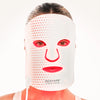
I have kept this in my own routine for ten years, so it is the first thing I would do. Four sessions a week for six weeks, then cycle it with the seasons. Ten to twenty minutes at a time, hands free, while you do something else.
Face taping
It looks ridiculous and it works. Clean dry skin, light tension, on overnight or through a long stretch at a screen, off slowly in the morning. The full method is in the tools section above.
The serum matters more than people think, because what you put on before the light goes into skin that is about to spend twenty minutes in repair mode. I use a peptide serum built on Matrixyl 3000, which in the research roughly doubled overall collagen production, lifted one structural type of collagen more than fourfold, and cut the surface area of deep wrinkles by about two thirds. I also mist green tea over my face first — green tea multiplies what red light does by around ten times, which is the single highest-return thirty seconds in my routine. Buy your tea carefully; most of it now carries heavy metals.
The treatments I would actually have
I have spent ten years testing skin treatments on my own face, in Asia, Europe and the Americas, because I build the devices and I wanted to know what the alternatives felt like from the chair. Six of them survived. What they have in common is that they either work with something your skin already does, or they leave nothing behind.
The order below is roughly the order I would try them in. Prices vary enormously by city — the same treatment can cost three times more in New York than in Bangkok — so the bands are a rough guide to what a single session tends to cost rather than a quote.
I Enzyme peels$ · Maintenance, not transformation
Most chemical peels work by burning off layers of skin with acid. Enzyme peels do something gentler. Enzymes from papaya, pineapple and pumpkin dissolve the bonds holding dead cells together at the surface, so nothing is forced off — you are helping along what was already on its way out.
Because enzyme peels stay at the surface, recovery is usually minimal. The result should simply look like clearer, fresher skin.
II Radiofrequency and focused ultrasound$$$$ · Thermage · UltraFormer
What the treatments do: Thermage uses radiofrequency energy, UltraFormer uses focused ultrasound, and both heat the deeper layers of the skin in a controlled way to set off a repair response. New collagen follows over the next three to six months. The good outcomes look refreshed rather than altered.
This is a less-is-more category, and the reason I have not made it part of my own routine is price. In North America the cost-to-benefit did not work for me. In Asia, where these are common and much cheaper, the maths changes.
III PRP with microneedling$$$ · Your own blood, nothing foreign
Because the concentrate comes from your own blood, you are giving the skin a more concentrated dose of repair signals it already knows how to use.
One round will freshen things before a wedding or a shoot. The change in texture and tone comes from a series. Of everything in aesthetics that involves a needle, this is the one I trust most.
IV Lymphatic and buccal facials$$ · Nothing injected, heated or removed
A lymphatic facial is exactly what it sounds like. A trained therapist uses light, careful strokes to move the fluid pooling around your eyes, cheeks and jaw out of the tissue — the same fluid behind the puffy, heavy, slept-badly face you meet in the mirror first thing. Once it moves, the swelling drops and circulation picks up.
Buccal massage is the deeper cousin. The therapist works the muscles of the face directly, including several they can only reach from inside your mouth. It is strange for the first minute and then it is not. Most of us hold a low-grade clench all day — screens, deadlines, years of thinking with the same expression on — and a good buccal therapist releases it. Afterwards your face moves differently and sits differently.
V Hydrafacial$$ · No downtime, and pleasant
A large part of why skin looks better straight afterwards is simply that it is hydrated. Hydrated skin reflects light more evenly, which reads as smoother and brighter. The exfoliation takes off the compacted surface cells that make skin look tired.
It will not tighten loose skin or erase a deep line. It will make your skin plumper and more radiant than when you walked in, and it is genuinely relaxing, which almost nothing else in this category is.
VI Profhilo$$$$ · The only injectable I would consider
Conventional hyaluronic-acid fillers are usually chemically cross-linked so the gel resists breakdown and can hold shape in tissue. Profhilo is different. It combines high- and low-molecular-weight hyaluronic acid into what are called hybrid cooperative complexes, stabilised with a patented thermal process rather than a chemical cross-linker such as BDDE. The result is a very fluid injectable designed to spread through tissue instead of sitting as a firm bolus to create projection or shape.
I originally liked the idea because it fit the way I think about aesthetics: improve the quality of the skin without trying to rebuild the face with filler. The current clinical evidence supports that distinction. Across published Profhilo studies, researchers have reported improvements in measures including hydration, elasticity, skin density, laxity, texture and wrinkle severity. Cell and tissue studies also show the hybrid HA complexes can stimulate collagen and elastin activity.
I am deliberately not giving it the old “gone in twenty-eight days” line. Profhilo is biodegradable hyaluronic acid and does not use the chemical cross-linking used to make conventional filler persist, but the research does not give me a clean human study showing that every trace is gone from facial tissue at day twenty-eight.
It is still an injection, so technique and the person holding the needle matter. The most commonly reported reactions are the predictable ones around an injection — swelling, redness, bruising and tenderness — and they are usually short-lived. But if I decide I am willing to put something injectable into my face, Profhilo is the exception I make.
What you can do at home
Getting to a good therapist is not always realistic. I travel to odd places, I hate paying for something I can do myself, and for years seeing anyone regularly was out of the question. That is what built my company. These five work on circulation, fluid, muscle tone and renewal, they fit in a suitcase, and together they cover different parts of the picture.
Facial cupping
Small silicone cups grip the surface of the skin and are drawn across it, pulling circulation up and moving pooled fluid out of the tissue. Puffiness drops and more oxygen and nutrients reach the skin. Use them with facial oil, keep them moving, never hold suction in one place. A few mornings a week.
Face taping
Had I known about taping earlier it would have been non-negotiable for every one of those years I spent working at a screen with a scowl of concentration set into my face. Tape supports the muscles and interrupts the repetitive tension that turns an expression into a line: forehead, the elevens, crow's feet, nasolabial folds, cheeks, jaw and marionette lines, under-eye puffiness, neck, and the clench itself. Use non-toxic, latex-free kinesiology tape with a gentle adhesive. Apply to clean dry skin at night or through a work block, light tension only, three or four times a week, and take it off slowly in the morning. Kathryn Romine is the best teacher I have found for the how.
Gua sha
A stone drawn along the face moves fluid out of the tissue and releases held tension through the jaw and neck, which over time shows up as less puffiness and a cleaner line along the jaw. Use it with oil, work from the centre of the face outward and down toward the neck. A few minutes is enough.
Microneedling
Controlled micro-injuries signal the skin to repair, which builds collagen and smooths texture. A good home device saves a great deal on professional sessions — Dr. Pen is the one to get, and buy numbing cream at the same time, because otherwise you will not do it twice. At home, 0.25–0.5 mm, two or three times a week, for texture and for getting actives in. The 1.5–3 mm depths that treat scars and deep lines belong with a trained provider.
Facial exercise
Your face has muscles, fascia and circulation like the rest of you, and most of us never use them deliberately or release them on purpose. Targeted work appears to reach tone and lift in a way taping and gua sha do not. Two programmes convinced me enough to pay for them: Anastasia's 30-Day GLOW at Beauty Fascia, a fascia-release course run by a structural integration therapist trained under Tom Myers, and Sadie Nardini's 21-Day Face HIIT Miracle, which fatigues and strengthens the muscles directly. I have started the first one this month.
Used together, these tools cover different ground. Cupping and gua sha are about fluid, circulation and tension. Taping is something I use to interrupt the expressions I hold for hours at a screen. Microneedling is the collagen-and-texture tool. Facial exercise works the muscle and fascia underneath. I do not expect one of them to transform a face on its own; I use them because small inputs repeated consistently add up.
The routine, and what goes on your skin
Seven actives earn their place on my shelf. Every one of them either feeds the barrier or asks your skin to make more of something it already makes — which is the whole test I apply before anything gets near my face.
SPF 30 or higher, every single morning. It is the highest-leverage thing you can put on your face and nothing else on this page competes with it. I use a non-nano mineral formula — the particles sit on the surface and block the light rather than being absorbed, which is gentler on reactive skin. Then water with electrolytes, and a humidifier if your air is dry.
Non-negotiable · Sixty secondsThe home version of the peel in the treatments section. A fruit-enzyme mask dissolves the bonds holding the surface cells on. No acid, nothing to recover from, softer and brighter by morning.
Ten minutes · Evening0.25–0.5 mm at home, followed straight away with peptides on freshly opened skin. Stack it with a light session the same day and the recovery is noticeably faster.
0.25–0.5 mm · Numbing creamTwo or three nights a week if your skin is reactive, building toward nightly. Bakuchiol is the daily-safe option and the one I would start with. Oils go on last so they seal what is underneath.
Build up slowly · Nightly is the goalSkin ageing is happening well below the surface too. Inflammation, blood sugar, digestion, hormones, sleep and even the bone underneath all change how a face holds its shape.
What shows up on your face
What you eat reaches your face faster than most of what you put on it. I keep the food side simple: a short list of things that give skin useful raw materials, plus one habit worth reducing.
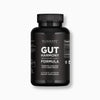
I keep this to four supplements, and I care more about the form than the number of bottles: magnesium as glycinate or threonate, D3 with K2 as MK-7, and well-absorbed forms throughout. I also look for third-party testing and transparent sourcing. Thorne, Pure Encapsulations and Designs for Health are the kinds of brands I mean.
The one thing I watch most is repeated blood-sugar spikes. Excess glucose can bind to proteins and damage them, including the collagen and elastin that keep skin firm. Repeated glycation can undo some of the collagen work you are trying to support everywhere else.
This is wider than sweets. Anything that spikes blood sugar repeatedly does it — soda, pastries, cereal, fruit juice, white bread, crackers, chips, pasta — and alcohol adds inflammation, wear and tear at cell level, dehydration and poorer blood sugar control on top. I still eat what I love. The aim is fewer spikes across a week, not a rule you will break by Thursday.
Two more things worth building in. Coconut water covers electrolytes, and hydrogen-rich water lowers cellular wear and improves how well your cells hold water — splash it on your face straight from the generator and the softness shows up within days. And skin problems very often trace back to the gut, so feed the microbiome: fermented foods, prebiotics like garlic, onion, oats and asparagus, collagen and broth, and less sugar and alcohol.
Three things I make
The first takes two minutes and starts my day. The other two are simply things I genuinely make when my skin needs a little extra help.
I Beauty ElixirHow I start the day
- Warm water, or hydrogen water
- Juice of half a lemon
- 1 tsp raw honey
- A pinch of turmeric
- Optional — 1 tsp apple cider vinegar
II Skin Glow JuiceVitamin C · Beta-carotene · Polyphenols
- 1 small beet, peeled — antioxidants, and the precursors your body uses to open up circulation
- 2 medium carrots — beta-carotene for renewal
- 1 cucumber — silica and water
- Half a green apple — gentle sweetness and polyphenols
- An inch of ginger — anti-inflammatory, and easier on digestion
- An inch of fresh turmeric, or a generous pinch ground
- Half a lemon, peeled — vitamin C, for building collagen
- A pinch of Celtic or Baja Gold salt — electrolytes and trace minerals
- A few cracks of black pepper — optional, and it switches the turmeric on
Juice everything cold and drink it inside the hour. Vitamin C and polyphenols start degrading the moment they meet the air.
III Skin Glow Bone Broth SoupCurrently obsessed
- 1 yellow onion, chopped
- 1 cup carrots, chopped
- 1 cup cauliflower, chopped or riced
- 1 cup orange and red peppers, chopped
- 2 sweet potatoes, or about a cup chopped
- 1 tbsp turmeric · 1 tbsp ginger, fresh or ground
- 2 cloves garlic, crushed
- 1 tbsp curry powder · 1 tsp cumin
- 4 cups bone broth · 1 can coconut milk
- 1 cup lentils, or chicken or shrimp
- Juice of 1 lime, and a handful of spinach
- To finish — lime, coriander, bean sprouts, spring onion, chilli oil
Chop everything. Heat a large pot with a drizzle of olive or avocado oil, put the vegetables and spices in over medium heat and stir until coated, then let them sit five to eight minutes, stirring through. Add the broth, lime, spinach, coconut milk and lentils, lid on, low to medium for ten to fifteen minutes. Serve as it is, or blend it for something creamier.
Stress, sweat and sleep
High cortisol breaks collagen down, raises inflammation, wrecks sleep and unsettles the gut. No serum and no treatment compensates for that running underneath. The regulation tools are unglamorous and free: four-seven-eight breathing, five or ten minutes of meditation, movement you actually enjoy, and being asleep by around ten.
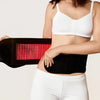
Sweating is one of the simplest things you can do for your skin, and it is the one people skip because it does not come in a bottle. Three to five times a week is plenty, and twenty to forty minutes is long enough. If you already train hard you are covered. If you do not, a sauna does it for you — ours is the NuShape Sauna Wrap, and the portable version stores under a bed.
Two things to do around it. Cleanse soon after you sweat, so nothing settles back into a pore, and rehydrate with water and electrolytes — magnesium especially, since you sweat it out. Skip heavy makeup in the sauna or the gym.
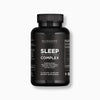
Sleep does more for my skin than any product I own, and it is free. In deep sleep the body switches into repair: skin cells regenerate, collagen is produced, inflammation is turned down. Short or broken sleep leaves cortisol high and circulation to the skin low, and the repair simply does not happen at the same rate. Over months that reads as dullness, slower healing, deeper lines. The timing matters as much as the hours, because the repair window is set by your circadian rhythm, or body clock — which is why the same seven hours starting at ten and starting at one are not the same seven hours.
I can see it within days in both directions. Sleeping well and going to bed earlier: less puffiness, more hydration, the light comes back. Running on four hours: I can see that too. It is the cheapest thing on this entire page and the one I still have to remind myself to protect.
Your face takes the shape of everything that formed you.
There is an old Taoist idea I love, called Original Face. Your energy, your intelligence, your essence. The way your eyebrows lift when you are surprised. The way your eyes crinkle when you are really laughing with your favourite people. Those lines are a map of what you have lived.
Through that lens our faces were never problems to be solved. They are proof of being someone unique and irreplaceable — which is worth holding onto while you read anything, including this, about how to change one.
The older I get, the less interested I am in chasing a younger face. I want strong skin, good collagen, healthy colour, expression, movement — and a face that still looks like mine. Most of that is built quietly, between appointments, by what I do again and again.
The Wellness Workshop · Jessica Charles
Module 07 · Workshop Access
You've finishedthe open modules.
The path keeps going — through nutrition, biomarkers, mindset, sleep and recovery, and the technologies people hear about long before anyone explains how to use them.
01–06 Open Foundations · 07–16 Workshop Access
- 07–08RegulationRegulate + nourish
- 09–10ContextAdd + measure
- 11–14AdvancedTechnology
- 15–16AdvancedBring it together
The full reading library is included with Workshop access. Purchase once and pick up at module seven, exactly where you left off.
Unlock the full Workshop $197Purchase once · Instant access · Yours to keep
Already have access
Access confirmed
The path isopen all the way.
All sixteen modules and the reading library are yours.