You're wearing the same jeans you wore three years ago. They still button. The scale hasn't moved much either.
And yet your body feels completely different.
Your waist is thicker. There's a soft layer around your middle that wasn't there before. Your arms and legs feel less firm, even though you haven't stopped moving. And the things that used to work, eating a little cleaner for a week or adding a few extra workouts, barely make a dent anymore.
If that sounds familiar, I want you to hear this first: you are not imagining it, and it is not a willpower problem.
Your metabolism is changing. And once you understand how, you can work with it instead of against it.
The research finally caught up with what we've been feeling
For years, women in their 40s were told that weight gain during midlife was simply about aging. Then researchers following thousands of women through the menopause transition in the long-running SWAN study (the Study of Women's Health Across the Nation) found something much more specific.
At the start of the menopause transition, the rate at which women gained fat doubled. At the same time, they began losing lean mass, meaning muscle. And here is the part that explains so much: their overall weight didn't speed up at all.
In other words, the scale stayed fairly steady while the body underneath it quietly rebuilt itself, with more fat and less muscle. That's exactly why you can weigh the same and still feel like you're living in a different body.
Why it settles around your middle
As estrogen declines through perimenopause, your body changes where it prefers to store fat. In your 20s and 30s, estrogen tends to direct fat toward your hips and thighs. As it drops, fat increasingly settles around your abdomen instead.
There are actually two layers to the perimenopause belly, and they need two different strategies:
The soft layer you can pinch. This is subcutaneous fat, sitting just under your skin. It's what changes the shape of your waist and how your clothes fit.
The deeper layer you can't. This is visceral fat, packed around your organs. You can't see it or pinch it, but it's the one most closely tied to blood sugar, inflammation, and long-term metabolic health.
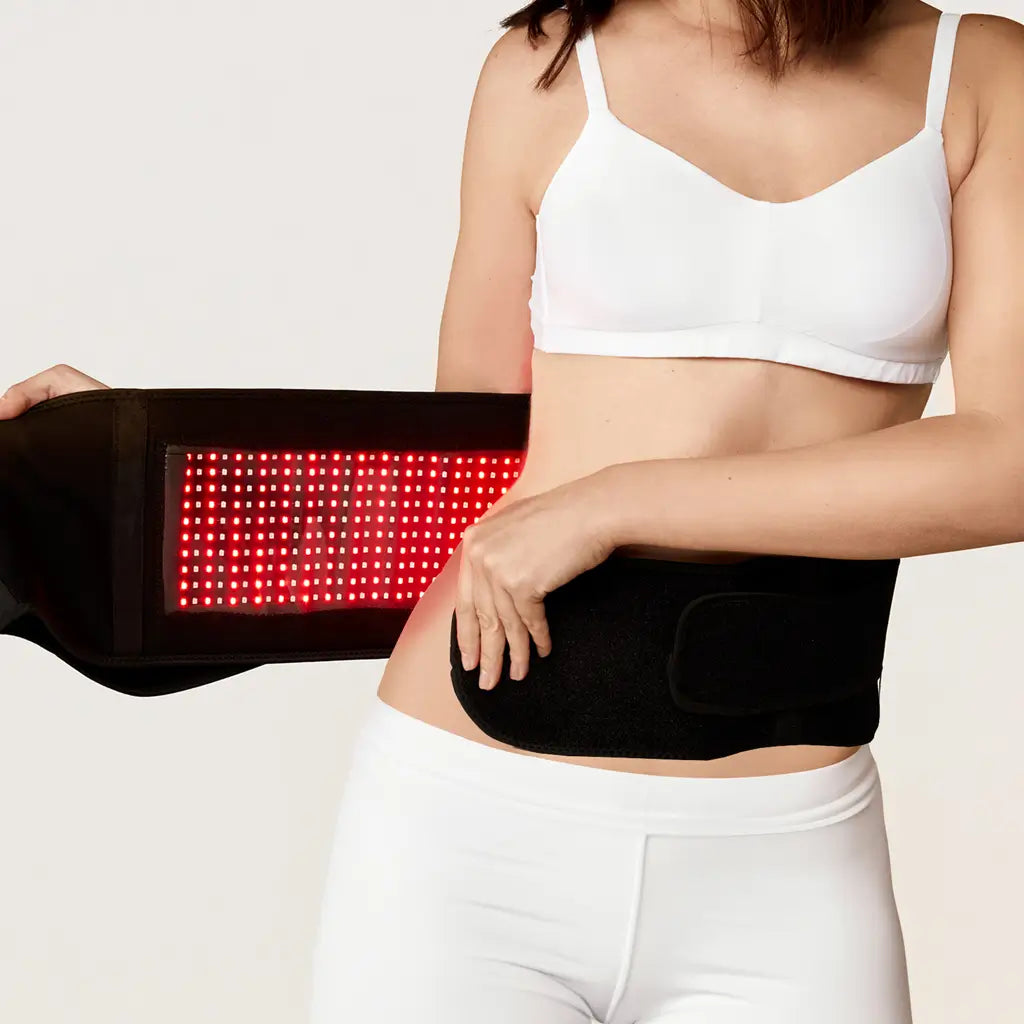
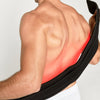
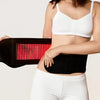
I want to be honest with you about this, because you deserve straight answers – the 635nm red light in the LipoWrap works on that first layer, the fat cells just beneath the skin. That's where it helps reshape your waistline. The deeper layer responds to what you do with your muscles, your meals, your sleep, and your blood sugar. The good news is that the second layer is exactly where some of the most exciting new light research is pointing.
Your blood sugar is part of the story
As estrogen declines, many women find their bodies don't handle blood sugar as smoothly as they used to. A slice of bread or a glass of wine that once barely registered can now leave you foggy, tired, hungry again an hour later, and craving more. (If the 4pm sugar cravings feel louder than ever, read our post on cravings in your 40s. It's all connected.)
Blood sugar spikes don't just affect your energy. Over time, they encourage your body to store more fat, especially around your middle.
This is where a fascinating 2024 study comes in.
What new research says about light and blood sugar
In 2024, researchers at City, University of London and University College London published a study in the Journal of Biophotonics that caught my attention immediately.
They gave 30 healthy adults a standard glucose drink, the same test doctors use to check how the body handles sugar. Half the group received 15 minutes of red light on their backs 45 minutes beforehand. The other half received no light.
The results: in the red light group, total blood sugar over the following two hours was 27.7% lower, and the highest spike was 7.5% lower.
The researchers believe the light stimulated the mitochondria, the energy centers in your cells, to produce more energy and burn through more glucose to do it.
What I love about this study is what it suggests: light isn't just something that touches our skin. It talks to our metabolism. And for women navigating a body that suddenly handles sugar differently, that's worth paying attention to.
It also fits beautifully into how I already recommend using your devices, which brings me to the protocol.
The Perimenopause Belly Protocol
This is the weekly rhythm I'd recommend to a girlfriend in her 40s who came to me frustrated with her midsection. It addresses both layers: the soft layer with targeted light, and the deeper layer with muscle, blood sugar, and recovery.
1. Time your LipoWrap session before your biggest meal
Wear the LipoWrap around your lower belly for 20 minutes, ending your session about 30 to 45 minutes before your largest meal of the day. You're already not eating for 30 minutes before a session, so this timing fits naturally, and it lines up with when the light was given in the blood sugar study.
How often: 4 to 5 days a week. On busy days, wear it while you prep dinner.
2. Lift something heavy, two or three times a week
This is the single most important thing you can do for your metabolism after 40. The SWAN research showed women lose muscle during the transition, and muscle is your body's biggest consumer of blood sugar. Every bit you keep or rebuild works for you around the clock. Squats, lunges, deadlifts, push-ups, resistance bands. It doesn't need to be fancy. It needs to feel challenging.
3. Recover on the LipoMat after strength days, and watch your strength climb
Here's a number that stopped me in my tracks. In a 12-week randomized study published in Lasers in Medical Science, people who received near-infrared light on their thighs after every strength session increased their leg press strength by 55%. The group that did the exact same training without light improved by 26%. Same workouts, same weeks, more than double the strength gains.
Researchers believe near-infrared light helps muscles recover faster, with less fatigue and inflammation, so every workout counts for more. And for a woman in her 40s fighting to hold on to muscle, that's exactly the edge you want.
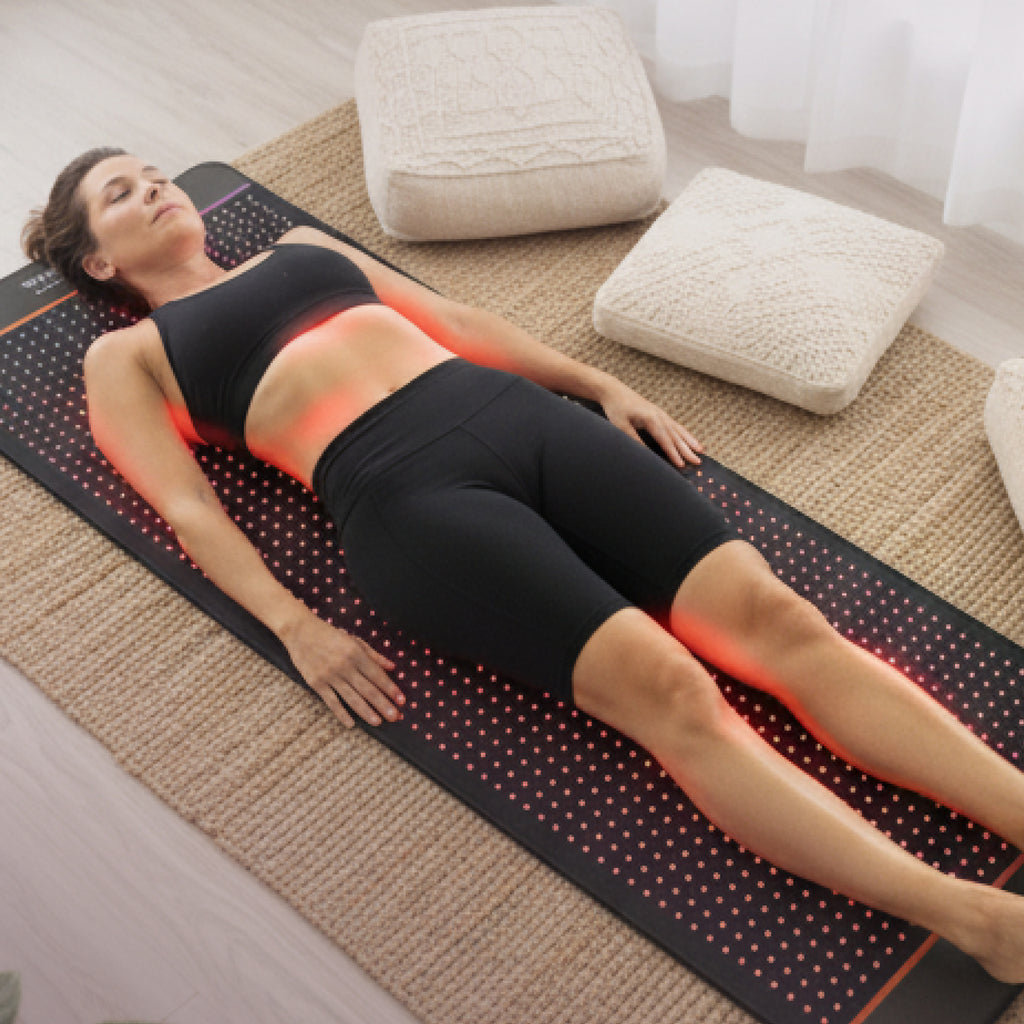
After a strength session, lie on the LipoMat in Mode 2 (Inflammation & Recovery, a 10 Hz pulse) for 20 to 30 minutes. The 850nm near-infrared reaches deep into the muscle you just worked, so you bounce back sooner and can train again with full strength, which is how muscle actually gets built.
4. Walk for 10 minutes after meals
A short walk after eating helps your muscles pull sugar out of your bloodstream. Pair it with your post-session movement on LipoWrap days and you've covered two goals at once.
5. Use Mode 3 when energy dips
That flat, heavy, afternoon slump is often a blood sugar dip in disguise. Instead of reaching for sugar or caffeine, try 20 minutes on the LipoMat in Mode 3 (Energy & Cellular Function, a 40 Hz pulse). Keep it to morning or early afternoon so it doesn't interfere with sleep.
6. Protect your sleep like it's part of your metabolism, because it is
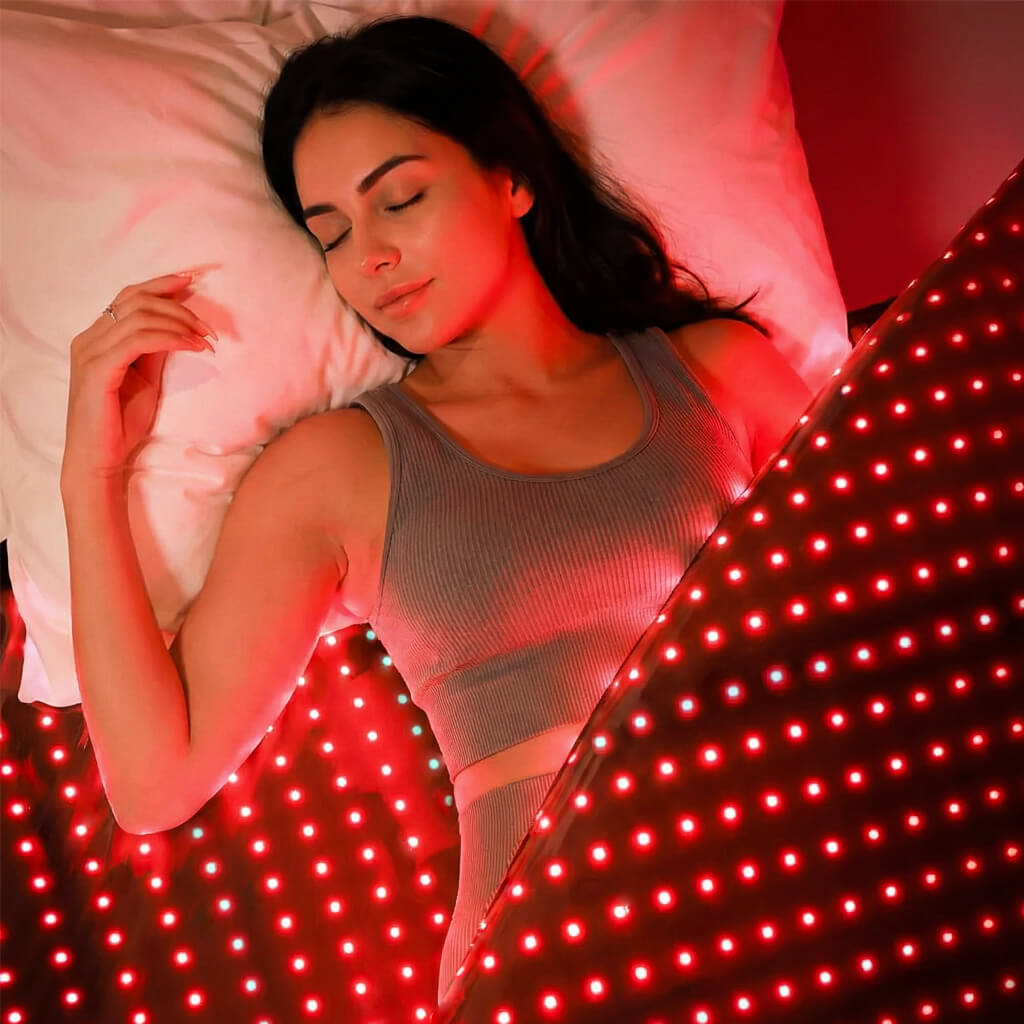
Even one night of poor sleep makes your body handle blood sugar less effectively the next day. And perimenopause is notorious for disrupting sleep. Dim your lights after sunset, keep screens out of the bedroom, and try our 20-minute red light wind-down before bed.
7. Eat protein at every meal
Protein helps you hold on to the muscle you're working hard to build, and it keeps blood sugar steadier than a carb-heavy plate. Start every meal with your protein and vegetables, then add carbs.
Your week at a glance
Monday: LipoWrap before dinner, strength training, LipoMat Mode 2
Tuesday: LipoWrap before dinner, 10-minute walks after meals
Wednesday: LipoWrap before dinner, strength training, LipoMat Mode 2
Thursday: LipoMat Mode 3 in the afternoon, 10-minute walks after meals
Friday: LipoWrap before dinner, strength training, LipoMat Mode 2
Saturday: Long walk or hike, LipoMat Mode 1 for full-body lymphatic support
Sunday: Rest, red light wind-down before bed
Measure what actually matters
If you take one thing from the SWAN study, let it be this: the scale is not telling you the whole truth anymore. You can lose fat and gain muscle and see no change at all on the scale.
Instead, measure your waist every two weeks at the same spot (just above your belly button), notice how your jeans fit, take a photo in the same light, and pay attention to your energy in the afternoon. Those are your real markers.
Which NuShape device fits this season of life?
The LipoWrap is your belly specialist. If your midsection is your main frustration, start here. It concentrates its 635nm and 850nm light on that one area, you can wear it while you cook or work, and it fits naturally into a before-dinner routine.
The LipoMat is your recovery and energy partner. If you're committing to strength training, dealing with achy joints, or fighting afternoon slumps, the LipoMat supports your whole body, with Mode 2 for recovery and Mode 3 for energy.
And if you want both layers covered, many of our clients in their 40s and 50s use the two together: the LipoWrap for the belly, and the LipoMat to recover and recharge.
A final word, from one woman in her 40s to another
Your body isn't failing you. It's changing, and it's asking for something different from what it needed at 30. More muscle, steadier blood sugar, better recovery, deeper sleep, and a little more kindness from you.
Give it those things, and add light that supports your cells along the way. I think you'll be surprised by what's still possible.
With light,
Jessica
Disclaimer / The Fine Print (Yes, We Have to Say It) We read the studies so you don't have to, but sharing research about light, the body, and wellness now comes with a mandatory footnote, thanks to the big tech giants. So here it is: this article is for educational purposes only and is not medical advice. Our devices are wellness tools, not medical devices, and are not intended to diagnose, treat, cure, or prevent any disease. Results vary from person to person. Please check with your healthcare provider before starting anything new, especially if you're pregnant, nursing, managing a health condition, or taking medication. Now go forth, stay curious, and get some good light.