Hair loss has a way of sending people down an expensive rabbit hole: shampoos, supplements, scalp serums, prescriptions, PRP, and now red light therapy caps promising to help hair grow from home.
So does red light therapy actually work?
For certain types of hair loss, particularly male and female pattern hair loss, the research is promising. Clinical studies have found improvements in hair density with consistent use of red and low-level light therapy over several months.
It is not a cure for every cause of hair loss, and it will not correct things like iron deficiency, thyroid dysfunction, or other underlying medical causes. But when follicles are still viable, red light may help support the biological environment they need to function and grow.
The short version
If you only want the basics:
-
Best studied for: male and female pattern hair loss
-
How it may help: supports cellular energy, circulation, and normal follicle activity
-
Common research wavelengths: around 650–660 nm red light
-
How long it takes: think months, not days
-
What matters most: consistent treatment and good scalp coverage
-
What it cannot do: fix every underlying cause of hair loss or revive a follicle that is no longer viable
Now for what is actually happening underneath the scalp.
Why light could affect a hair follicle in the first place
A hair follicle is surprisingly active tissue.
Each follicle has its own blood supply and moves through a repeating cycle of growth, transition, rest, and shedding. During the active anagen phase, cells at the base of the follicle divide rapidly to build a growing hair shaft.
That process requires energy.
Red light therapy, also called photobiomodulation, uses specific wavelengths of light that can interact with cellular pathways involved in mitochondrial function.
Mitochondria help cells produce ATP, the usable energy required for repair, signaling, growth, and normal function.
Red light can also influence nitric-oxide signaling and local circulation, two more reasons researchers believe it may support the environment surrounding an active hair follicle.
It does not simply “feed” the follicle or force new hair to appear. The idea is more subtle: support the follicle’s normal biology and give it a better environment in which to function.
What the research actually shows
One of the better-known studies looked specifically at women with pattern hair loss.
Women between 18 and 60 used a helmet-style device containing 655 nm lasers and LEDs every other day for 16 weeks. Another group used an identical-looking sham device.
After 16 weeks, the women receiving active light therapy had a significantly greater increase in hair count than the placebo group.
The active group increased hair count by about 48% from baseline compared with roughly 11% in the sham group, representing an approximately 37% greater increase relative to placebo.
More recent research has strengthened the overall picture.
A 2024 systematic review and meta-analysis evaluated 38 studies involving more than 3,000 patients and found that low-level laser and LED therapy significantly improved hair density compared with placebo in people with androgenetic alopecia.
That last part matters.
What kind of hair loss may respond best?
The strongest evidence currently surrounds androgenetic alopecia, better known as:
-
Female pattern hair loss
-
Male pattern hair loss
-
Hereditary hair thinning
This type of hair loss usually happens gradually as susceptible follicles become smaller and begin producing finer, shorter hairs.
Red light therapy has been studied specifically in this group.
Hair loss caused by something else may require a very different approach.
Sudden shedding or thinning can also be associated with:
-
Hormonal changes
-
Thyroid dysfunction
-
Iron or nutrient deficiencies
-
Severe stress or illness
-
Rapid weight loss
-
Postpartum changes
-
Autoimmune conditions
-
Certain medications
-
Traction from hairstyles
Red light will not correct an iron deficiency or thyroid problem.
If hair loss is sudden, severe, patchy, or unexplained, finding the cause should come before choosing a device.
How red light may support hair growth
Researchers are looking at several overlapping mechanisms.
Cellular energy
Hair follicles are metabolically active, especially while producing a growing hair.
Red and near-infrared light can interact with pathways involved in mitochondrial function and ATP production, potentially giving cells more usable energy for normal activity and repair.
Scalp circulation
Photobiomodulation can influence nitric-oxide signaling, which plays a role in local blood flow.
Every healthy follicle relies on a vascular supply to deliver oxygen and nutrients.
Better circulation does not automatically mean more hair, but it is one part of the follicle’s biological environment.
The hair-growth cycle
A follicle does not produce hair continuously.
It moves through four main phases:
Anagen — active growth
Catagen — transition
Telogen — rest
Exogen — shedding
One proposed effect of red light therapy is helping follicles remain in, or return to, the active anagen phase.
This is an important distinction because many successful hair-loss treatments do not create brand-new follicles. Instead, they help existing follicles produce healthier hairs or remain active for longer.
Red light vs. near-infrared light for hair growth
Most hair-growth research has focused heavily on wavelengths in the mid-600 nm red-light range, including approximately 650, 655, and 660 nm.
Red light is well suited to relatively superficial tissue like the scalp and hair follicle.
Some devices also include near-infrared wavelengths such as 810 or 850 nm, which penetrate more deeply into tissue.
But there is no single “magic” wavelength.
A useful device depends on the entire treatment setup:
-
Wavelength
-
Light output
-
Distance from the scalp
-
Coverage
-
Treatment time
-
Consistency of use
A technically impressive device you rarely use is unlikely to outperform a well-designed one that fits easily into your routine.
How long does red light therapy take to work?
This is where hair-growth marketing can become misleading.
Hair grows slowly.
In the women’s study above, treatment continued for 16 weeks. Other studies have used somewhat different schedules and treatment periods.
That means it makes more sense to think in months rather than weeks.
You may notice changes in shedding or small new hairs before seeing a major cosmetic difference in density, but hair follicles simply do not work on a seven-day timeline.
Consistency matters more than occasional long sessions.
And more light is not automatically better. Photobiomodulation has a dose-response relationship, so follow the treatment protocol for the specific device you are using.
Can red light therapy be used with minoxidil or other treatments?
Often, yes.
Hair loss does not have to be treated with a single approach.
Depending on the cause and severity, dermatologists may use combinations of:
-
Minoxidil
-
Other topical or oral medications
-
Nutritional correction
-
PRP
-
Red or low-level light therapy
-
Hair transplantation
Research comparing low-level light therapy with minoxidil has found that both can support hair growth, while some studies suggest combination therapy may perform better than either treatment alone.
That makes sense because the treatments work through different pathways.
What to look for in an at-home red light therapy cap
If you are considering an at-home device, don’t buy one simply because it glows red.
Look for clearly stated wavelengths
The company should tell you exactly what wavelengths the device uses.
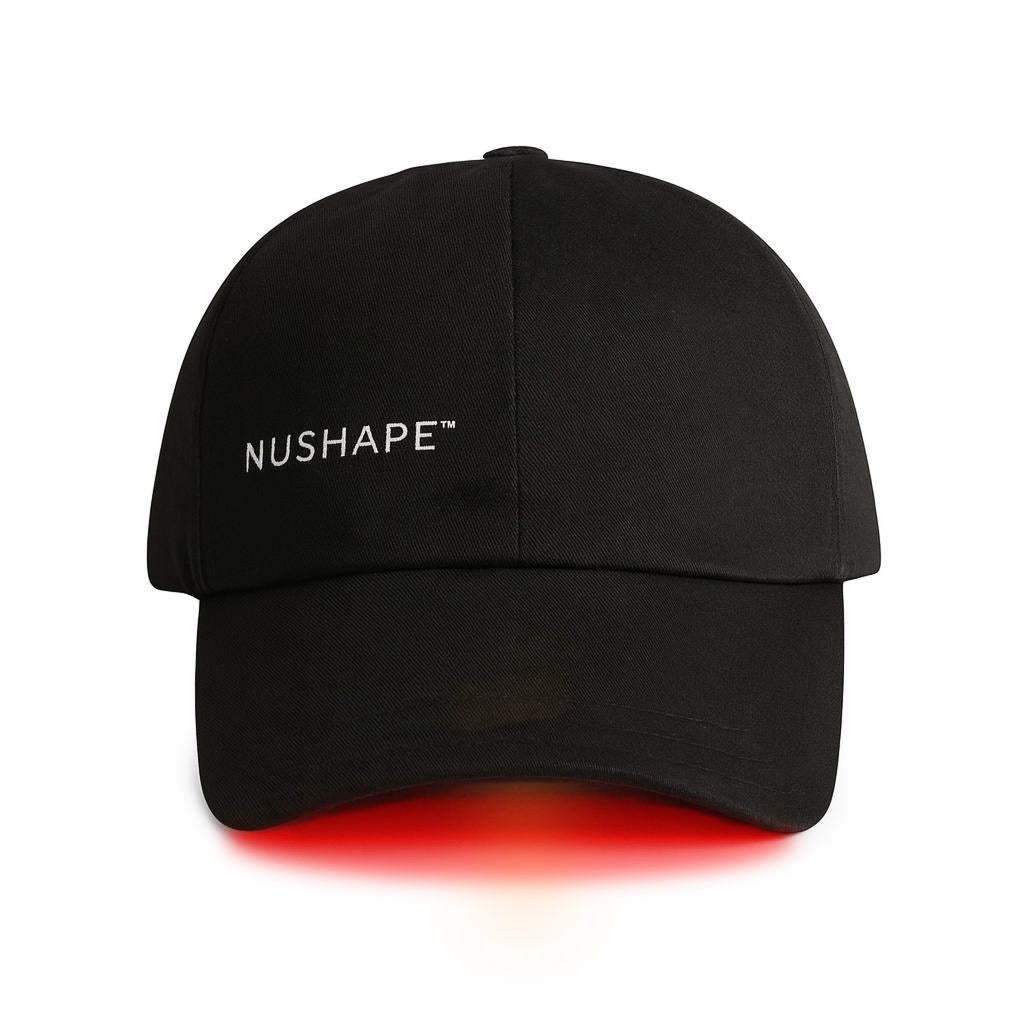
Red wavelengths around the mid-600 nm range have been widely used in hair-growth research. Check our the Nushape Laser Cap.
Look for good scalp coverage
A handful of LEDs concentrated in one area is not the same as treating the majority of the scalp.
Coverage matters.
Look at how close the light sits to the scalp
Hair itself can block light.
Device geometry and positioning can therefore make a real difference.
Choose something you will actually use
Hair treatment requires consistency over months.
If every session requires an elaborate setup, the device becomes much harder to stick with.
Wearable caps solve an important practical problem: they allow you to treat a large area of the scalp without holding a device in place.
The NuShape approach
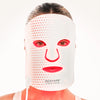
The NuShape Laser Cap combines 660 nm red light with 850 nm near-infrared light in a lightweight, rechargeable wearable design.
It is built around something that matters enormously in any long-term hair-growth protocol: consistency.
You can put it on for a treatment session while reading, working, relaxing, or going through the rest of your routine rather than standing in one place holding a light over different sections of your scalp.
And when the goal requires months of repeated use, that convenience matters.
So, does red light therapy work for hair loss?
For male and female pattern hair loss, there is credible clinical evidence that consistent low-level red-light therapy can improve hair density in at least some people.
That does not make it a miracle treatment.
It does not fix every underlying cause of hair loss. It cannot guarantee regrowth. And it should not replace figuring out why significant or sudden hair loss is happening.
But for follicles that are still active and capable of producing hair, photobiomodulation offers something interesting: a non-invasive way to support cellular energy, circulation, and the normal biology of the follicle itself.
Hair growth is slow.
The goal is not to force it.
The goal is to create a better environment for the follicle and give it enough time to respond.
Frequently Asked Questions
Can red light therapy regrow hair?
Research suggests that red and low-level light therapy can increase hair density in some people with androgenetic alopecia, also known as male or female pattern hair loss. Results vary, and not every cause of hair loss has been adequately studied.
What wavelength is best for hair growth?
Many clinical hair-growth studies have used wavelengths around 650–660 nm. Some devices also include near-infrared wavelengths such as 810 or 850 nm. Wavelength is important, but output, scalp coverage, treatment dose, and consistency matter too.
How often should you use red light therapy for hair loss?
Protocols vary by device. One well-known clinical trial used 655 nm light every other day for 16 weeks. Follow the instructions for your specific device rather than assuming that more frequent treatment is better.
How long before red light therapy grows hair?
Expect months rather than weeks. Hair follicles move through slow biological growth cycles, and many studies evaluate results after approximately four months or longer.
Does red light therapy help female hair loss?
Female pattern hair loss is one of the areas directly studied. A randomized controlled trial in women with androgenetic alopecia found significantly greater increases in hair count with active 655 nm light treatment than with a sham device.
Can you use red light therapy with minoxidil?
Yes, red light therapy is sometimes used alongside other hair-loss treatments. Combination approaches may be appropriate depending on the cause of hair loss and the treatment plan recommended by a dermatologist.
References
Lanzafame RJ, et al. The Growth of Human Scalp Hair in Females Using Visible Red Light Laser and LED Sources. Lasers in Surgery and Medicine. 2014.
Low-Level Laser and LED Therapy in Alopecia: A Systematic Review and Meta-Analysis. Dermatologic Surgery. 2024.
American Academy of Dermatology. Is Red Light Therapy Right for Your Skin?
American Academy of Dermatology. Hair Loss: Diagnosis and Treatment.
Ready to add light therapy to your hair routine? Explore the NuShape Laser Cap →